The Founder Sales Trap: Why Being the Best Closer in Your Business Can Hold You Back
Most founders are dangerous in a sales meeting.
In a good way.
They know the business inside out. They know why the offer exists, where the value is, what the customer is really worried about, and which promises can actually be kept. They can hear one objection and instantly know what is sitting underneath it. They can tell the story properly because they lived it.
That is why, in the early days, the founder is usually the best salesperson in the business.
And at first, that is exactly how it should be.
The founder gets the business moving. They bring in the first customers. They learn what people care about. They adjust the offer, sharpen the pitch, handle the awkward conversations and get enough deals across the line to prove there is something real here.
But then the business grows.
More leads come in. More quotes go out. More meetings get booked. More people join the team. Delivery gets busier. Operations need attention. Finance gets louder. Staff need managing. Customers need support.
And somehow, even after all that growth, the same thing is still true:
The founder is still the best salesperson.
At first that sounds like a compliment.
Eventually, it becomes a problem.
Because if every serious opportunity still needs the founder to step in, the business is not really scaling. It is just waiting for the founder to have time.
That is the founder sales trap.
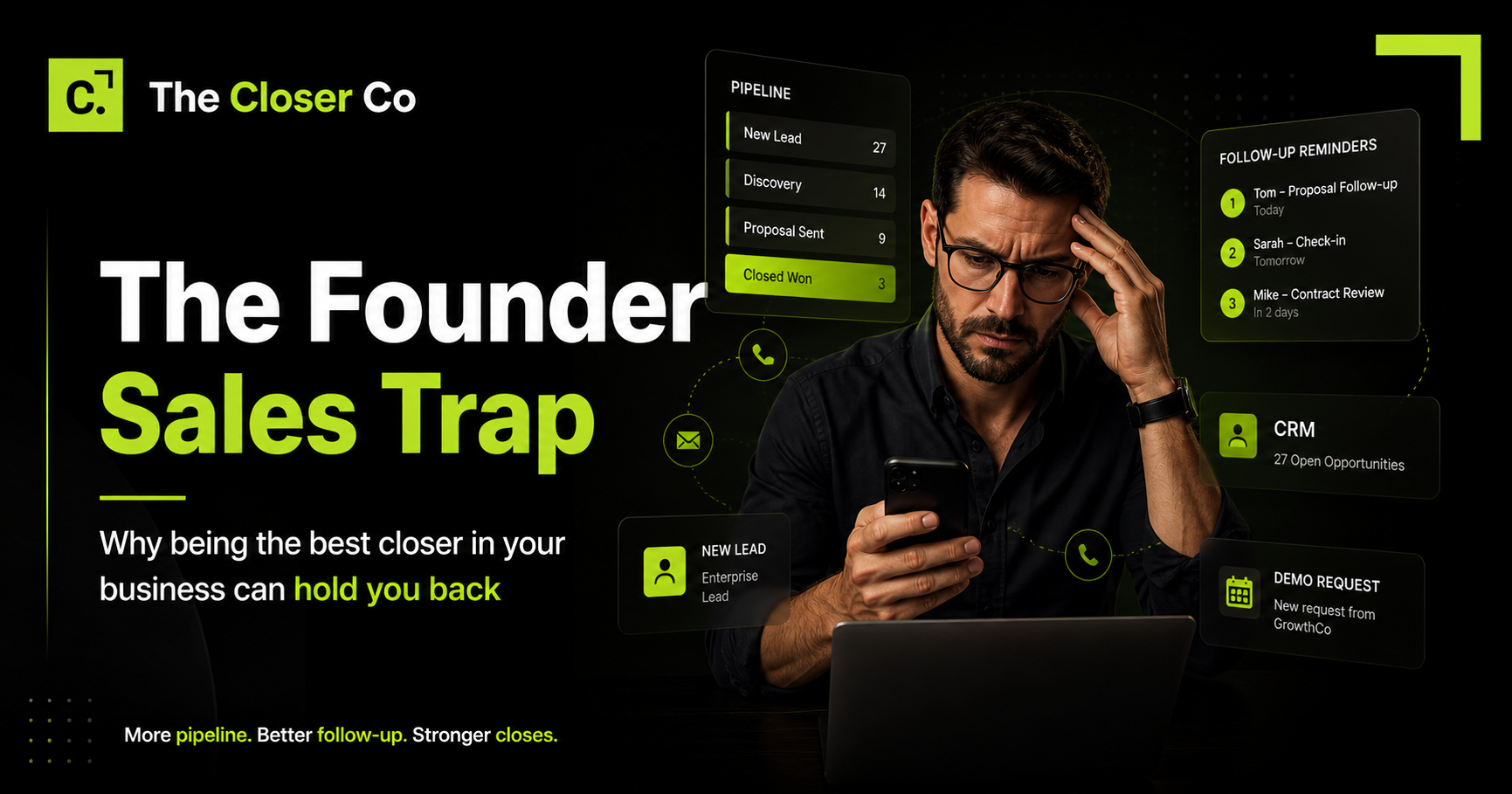
It usually does not look dramatic from the outside. The business might look healthy. There might be leads coming in, proposals going out and a team that seems busy.
But behind the scenes, sales still depends on one person's memory, energy and availability.
The founder knows which lead is hot.
The founder knows which quote needs chasing.
The founder remembers the context from that meeting two weeks ago.
The founder knows what the customer really meant when they said, "We'll think about it."
The founder knows which deal is likely to close and which one is quietly dying.
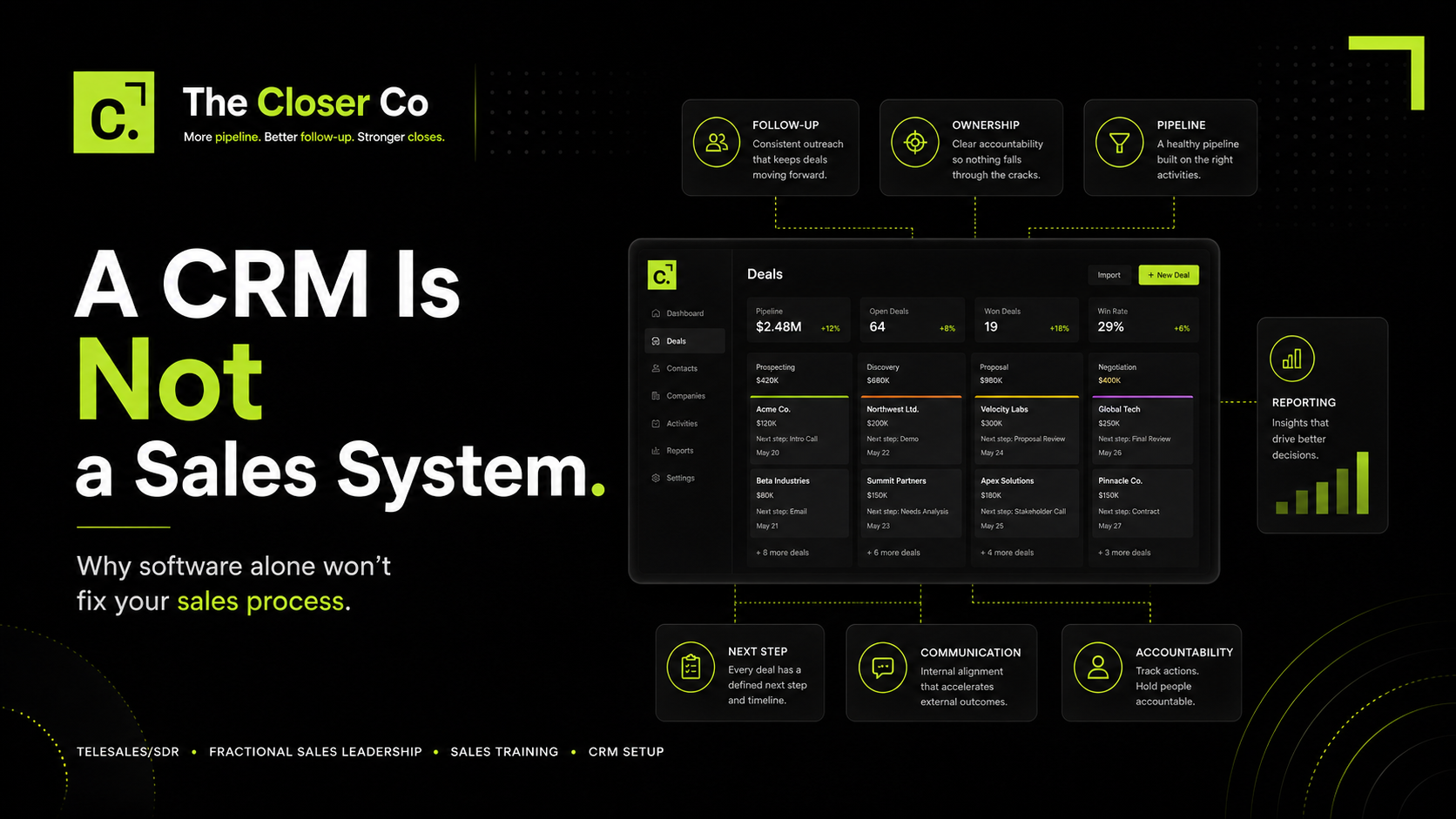
The CRM might technically exist, but the real sales system is still living in the founder's head.
That is a very expensive place to keep it.
Because founders get busy. They get pulled into delivery. They get stuck in internal meetings. They go away. They get distracted by problems only they can solve. And when that happens, sales momentum drops.
The lead waits. The follow-up gets delayed. The quote is not chased. The opportunity cools off. The team assumes someone else has it. The customer moves on.
Not because the business has a bad offer. Because the sales function is too dependent on the founder.
"Just hire a salesperson" rarely fixes it
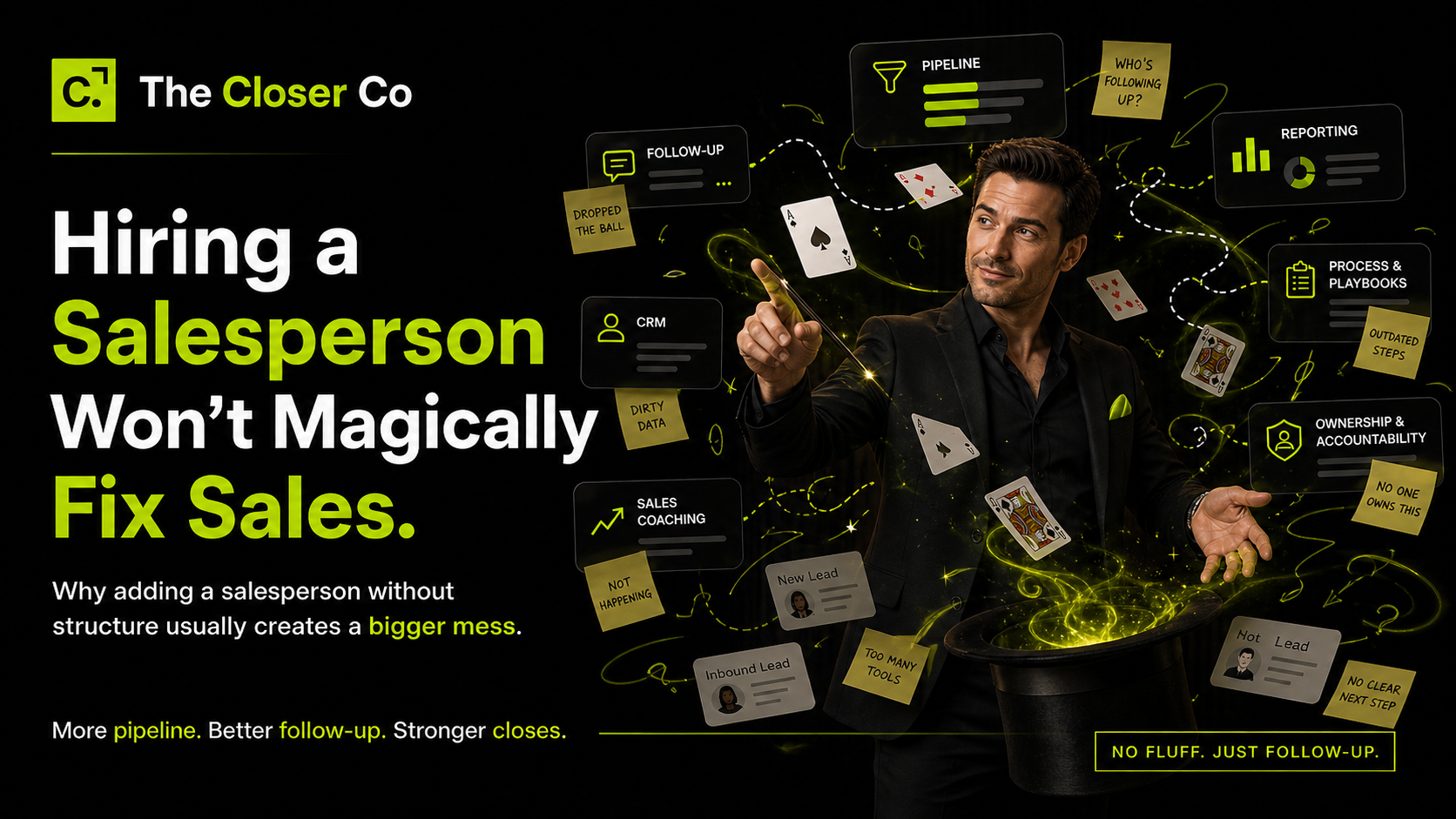
This is where a lot of businesses make the wrong move. They decide the answer is to "hire a salesperson."
Sometimes that is the right move. But hiring a salesperson into a messy sales process does not magically create a sales engine.
It often just creates a frustrated salesperson and a founder who ends up jumping back in anyway.
The new salesperson gets a CRM login, a few old leads, a vague target and a rough explanation of what the company does. Then everyone waits for revenue to appear.
When it does not, the founder starts thinking, "Maybe they just don't get it."
Sometimes they don't. But sometimes the real problem is that there was never a proper system for them to step into.
No clear target customer. No agreed follow-up rhythm. No clean pipeline stages. No call framework. No proposal process. No weekly sales review. No proper coaching. No accountability around what is moving and what is stuck.
So the salesperson does what most people do inside an unclear system. They make some calls. Send some emails. Update a few notes. Have a few "good chats." Then the founder looks at the pipeline and still has no idea what is actually going to close.
That is not a people problem. That is a structure problem.
The founder's role needs to change
The truth is, most businesses do not need the founder to disappear from sales. That would be a mistake. The founder still has huge value in the sales function, especially when it comes to positioning, major relationships, key accounts and understanding the market.
But the founder's role needs to change. They should not be the whole engine. They should be the architect of the engine.
That means taking what is currently instinctive and turning it into something visible, teachable and repeatable.
How should a lead be handled when it comes in? How fast should someone respond? What questions need to be asked? What makes a lead qualified? What happens after the first call? When does a quote get followed up? What should be recorded in the CRM? Who owns the next step? What gets reviewed every week?
None of this needs to be complicated. But it does need to exist.
Because once the process is clear, the founder is no longer the only person who can move deals forward. Other people can step in. The team can see what is happening. The CRM starts telling the truth. Sales meetings become useful. Follow-up stops relying on memory. Opportunities stop disappearing into inboxes.
That is when sales becomes a function, not just a founder habit.
Visibility changes everything
A good sales engine gives the business visibility. You can see what leads have come in. You can see who owns them. You can see what stage they are at. You can see what is stuck. You can see what needs a follow-up. You can see whether the team is creating real movement or just staying busy.
When sales is invisible, the founder has to keep asking, chasing, checking and rescuing. When sales is visible, the business can actually manage it.
This is the shift growing businesses need to make.
From "the founder closes the deals" to "the business has a sales process that gets deals moving." From memory to system. From random follow-up to rhythm. From vague updates to pipeline reviews. From one great closer to a team that knows what good looks like.
That is what removes the bottleneck. Not more pressure. Not more motivational sales meetings. Not another person with a job title and no structure around them. A real sales engine.
The uncomfortable truth
The slightly uncomfortable truth is that being the best closer in the business can feel good. It makes the founder feel useful, needed and close to the action.
But if the business can only sell properly when the founder is involved, the business is fragile. It can grow, but only as fast as the founder can keep up. And eventually, that ceiling gets very obvious.
The better version is not a business where the founder never sells. It is a business where the founder is no longer the only reason sales happen.
That is the difference between a business that is busy and a business that is building properly.
Because growth should not depend on whether the founder has time to follow up a lead. It should depend on a sales engine that does the job every week.
/ Stop letting deals stall